
In the world of poultry, few breeds possess the charm and appeal quite like the Orpington chicken. With its distinctive appearance, friendly demeanor, and prolific egg-laying capabilities, the Orpington has endeared itself to poultry enthusiasts worldwide. Let's take a closer look at this beloved breed, from its rich history to its delightful characteristics.
History of the Orpington chicken breed
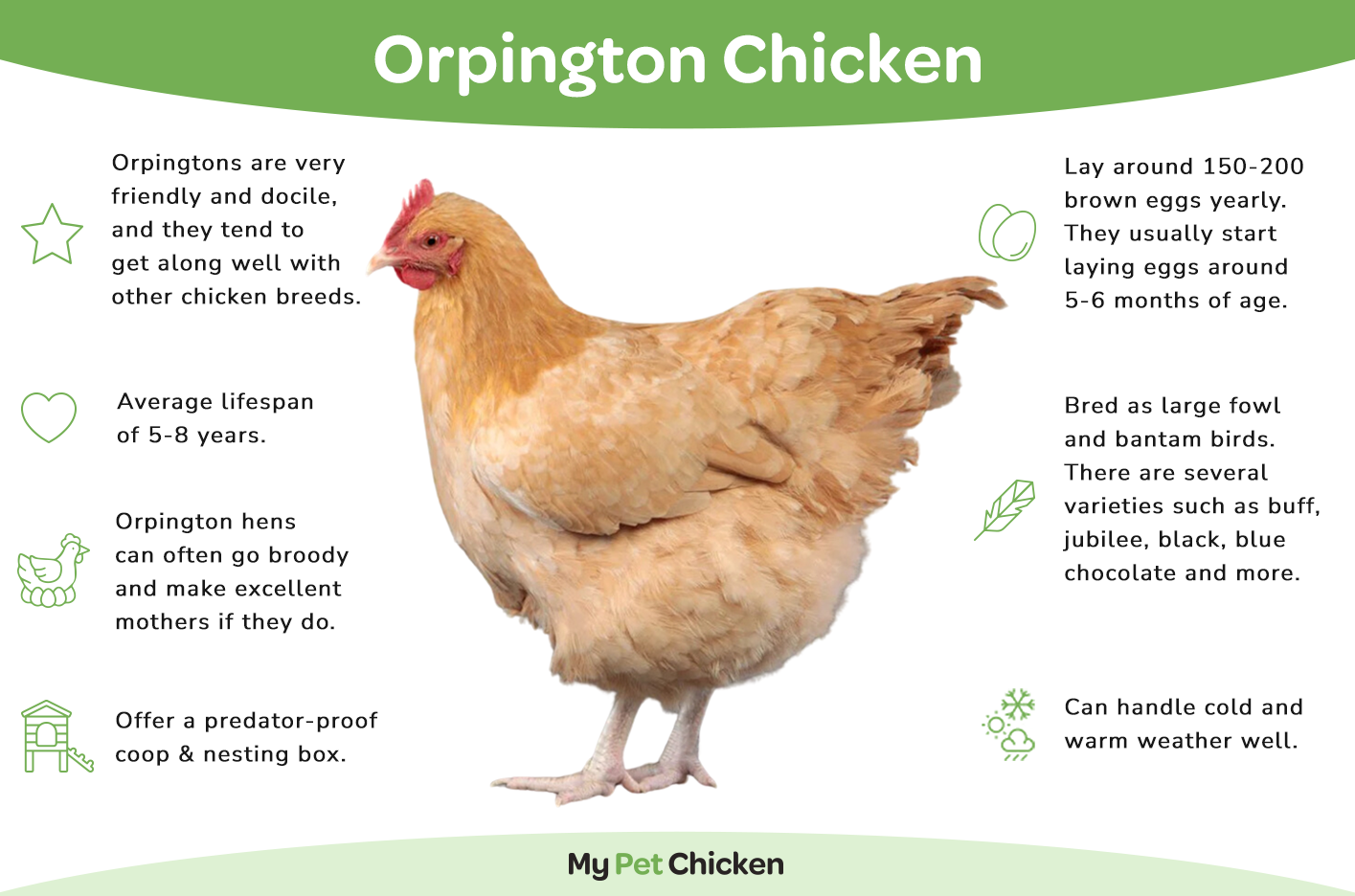
The Orpington chicken traces its roots back to England in the late 19th century. It was developed by William Cook, a renowned poultry breeder, who aimed to create a dual-purpose bird that excelled both in meat production and egg laying. Named after the town of Orpington in Kent, where Cook resided, the breed quickly gained popularity for its appealing qualities.
The American Poultry Association designated Orpington chickens as standard breed in four variations: Buff in 1902, Black in 1905, White in 1905, and Blue in 1923.
Related Article: Chicken Breed List: Orpington
The personality of an Orpington chicken
Beyond their charming looks, Orpingtons are beloved for their gentle and sociable nature. They are known for their calm demeanor and friendly disposition, making them excellent additions to backyard flocks and family farms.
Orpingtons are typically docile and easy to handle, making them ideal for beginners and experienced poultry keepers alike. Their affable personalities also make them great companions for children, as they are known to tolerate handling well.
The appearance of Orpington chickens
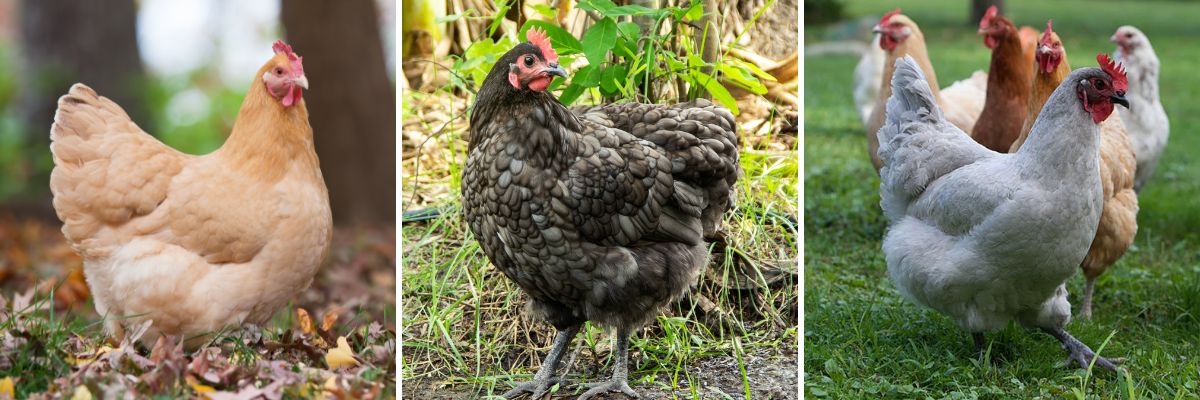
One of the most striking features of the Orpington is its plush, soft feathering, which gives it a distinctly cuddly appearance. These birds come in several color varieties, including black, lavender, buff, jubilee, and blue, each with its own unique beauty. Orpingtons have a broad, sturdy build, with a deep, rounded body and a relatively low stance. Their small, upright tails and medium-sized single comb add to their attractive appearance.
- Orpington hens typically weigh between 6-8 pounds.
- Orpington roosters typically weight between 8-10 pounds
Related Products:
- Baby Chicks: Buff Orpington
- Baby Chicks: Lavender Orpington
- Baby Chicks: Blue/Black/Splash Orpington
- Baby Chicks: Chocolate Orpington
- Baby Chicks: Jubilee Orpington
- Baby Chicks: Black/Lavender Split Orpington
- Pullet: Buff Orpington
- Pullet Lavender Orpington
- Pullet: Blue/Black/Splash Orpington
- Pullet: Chocolate Orpington
- Pullet: Jubilee Orpington
Egg Color and production of the Orpington chicken
In addition to their amiable temperament and eye-catching appearance, Orpingtons are valued for their egg-laying abilities. These hens are great layers, capable of producing a respectable number of large, brown eggs throughout the year.
While individual production rates may vary, Orpingtons generally lay consistently, making them a reliable source of fresh eggs for households and small-scale egg operations alike. You can expect between 150-200 eggs per year from your Orpington hen. Orpington hens usually start laying around 5-6 months of age.
Orpington hens, often exhibit a tendency to go broody, eagerly embracing the role of motherhood when the instinct strikes. This natural inclination to incubate eggs and nurture chicks makes them excellent and attentive mothers. Their broodiness is a cherished trait among poultry enthusiasts.
Care and health for Orpington chickens
Orpington chickens are hardy and adaptable to a wide range of climates including both hot and cold weather. With proper care and attention, they can live healthy and productive lives, laying an abundance of eggs for years to come. The average life span of this chicken breed is 5-8 years.
Do you have any Orpington chickens in your flock? Share with us in the comments below.
Ready to grow your flock? Discover all our day-old baby chicks and choose your perfect match.


6 comments
I have lavender orpingtons they just started to lay but eggs very small
———
My Pet Chicken replied:
That’s exciting that your Lavender Orpingtons just started laying! What you’re seeing is completely normal as the first eggs a young hen lays, often called "fairy eggs,” are always much smaller than what she’ll eventually produce. As her reproductive system matures over the next few weeks, the eggs will gradually increase in size until they reach the full, expected size for the breed. Before long, your Orpington girls should be giving you those nice, large eggs they’re known for. Enjoy these tiny treasures; they’re a sign of more good things to come!
My granddaughter “gifted” me 4 chocolate Orpingtons. They are all supposed to be hens but one is looking very “cocky”. I grew up with leghorns that are easy to distinguish the hens. How do I know?
———
My Pet Chicken:
What a wonderful addition to your flock! With roos, you normally won’t be able to tell a male from a female until your bird is three months old or so, since that is when specialized feathers will be coming in that are the dead giveaway. Roos will have the hackle, saddle, and sickle feathers that are very obvious but depending on the individual, those feathers may be apparent as early as 14 weeks but almost always visible by 22 weeks! If during that time you would like for us to review a photo of your Chocolate Orpingtons, please send us an email and we would be happy to!
I received one Buff Orpington when she was 1 year old. She was not nice, attacked me on my legs bloody whenever I came near her and badly hurt 2 young Appenzellers. Now she is 5 and has calmed down.
———
My Pet Chicken:
Wow, what a journey you’ve had with your Buff Orpington! It’s rare that we hear about an aggressive one since they’re usually known for their sweet nature, but every individual chicken can have its own personality. It’s great to hear that she’s mellowed out over time! Hopefully, she continues to be a more peaceful member of your flock. Thanks for sharing your experience!
In Italy there are very small Orpingtons called mignon or nano. Do they exist in the US and if so where can i buy them?
———
My Pet Chicken:
The Orpington mignon or nano you’re referring to are likely what we call Bantam Orpingtons in the U.S.—a smaller version of the standard Orpington. They’re just as friendly and beautiful but in a pint-sized package!
While they’re not as common as standard Orpingtons, some breeders and hatcheries in the U.S. do offer Bantam Orpingtons. I’d recommend checking with specialty poultry breeders or searching online poultry marketplaces.
I’m in SA, NorthWest Province. Where can a person get the Orpington laying hens in South Africa .
Kind Regards
———
My Pet Chicken replied:
Unfortunately, we don’t have any resources for countries outside of the USA. We would recommend checking with a local agricultural agent or department as your best resource.