Frequently Asked Questions
Here we answer the most commonly-asked questions about ordering, chicken care, and more.
What do I need to know about wolves and coyotes if I keep chickens?
Name: Wolf, Coyote Canis lupus, Canis latrans Description: Wolves and coyotes are both members of the dog family, and appear as large (scary!) dogs with silvery or brownish fur. Wolves can be up to 5 feet long (excluding tails), and nearly three feet tall at the shoulder. They can weigh up to 175 pounds, but average around 80. Coyotes can be up to about 3 feet long (excluding the tail), and about 2 feet tall at the shoulder. They can weigh up to 75 pounds, but average around 50. Distribution/Habitat: Coyotes are found in North America. Various species of wolves...
Read MoreWill my dog attack chickens?
Domestic dogs--including those belonging to you as well as those belonging to other people--are the most common predators of chickens in both suburban and rural areas. Most dogs are not trying to kill your birds. They simply want to chase, but even chasing can be fatal, because chickens often break their necks trying to get away, or die of heart attacks if they have no where safe to escape. In cases where your chickens are neither hurt nor killed by a dog attack, they can still be thrown off laying for days or even several weeks due to the upset....
Read MoreWhat do I need to know about raccoons if I keep chickens?
If you keep chickens, raccoons are one of the biggest threats to your flock. With their nimble paws and puzzle-solving smarts, these nighttime raiders can tear through weak coop defenses in search of an easy meal. But don’t worry—you can outsmart them. Learn how to secure your setup and protect your birds with a few simple, proven tactics.
Read MoreWhat do I need to know about snakes if I keep chickens?
Name: Snakes Serpentes spp (nearly 3000 species) Description: *Legless reptiles of many colors *Snakes range in size from just a few inches/a few ounces to those that are more than 25 feet long and more than 200 pounds Distribution/Habitat: Various species are found throughout the world Hunting Behavior: Most snakes too small to be predators of adult chickens. Instead, they tend to be predators of eggs and young chicks. (The largest snakes are inhabitants of rain forests, and we suspect that very few backyard chicken keepers will live in the Indian or South American jungles.) Very small snakes won't even...
Read MoreWhat do I need to know about weasel family predators if I keep chickens?
Name: Weasel, ermine, ferret, mink, badger, fisher, ermine, wolverine, skunk, etc. Mustelidae and Mephitidae spp Description: This group contains diverse predators including those listed above. Those species interested in preying on your chickens generally are small to medium, long-bodied, short-legged omnivorous mammals. Some are tiny; for instance, some weasels aren't much bigger than a mouse, but they can kill rabbits and chickens many times their size. Some members of this group are very large; for instance, wolverines have weighed up to 70 pounds. Distribution/Habitat: Various species are found throughout the world Hunting Behavior: Some in this group are not predators...
Read MoreWhat do I need to know about foxes if I keep chickens?
Name: Fox Vulpes spp. Description: *Many different species of reddish or greyish, dog-like mammals with long bushy tails *Up to 3 feet long (excluding tails, which may add another 2 feet), and weighing up to 22 lbs average (record is 26.5 pounds) Distribution/Habitat: Various species are found throughout the world Hunting Behavior: Foxes will not appear in suburban settings as often as raccoons or opossums, but they are still a danger. They will normally stake out your coop beforehand so they know when to strike, grab a bird, and how to get away fast. If they get inside an enclosed...
Read MoreWhat do I need to know about house cats if I keep chickens?
Domestic house cats very rarely attack adult chickens, but they can be a serious danger to baby chicks, and occasionally to juvenile birds or small bantams. That said, not all are, to be sure. With chicks, it's better safe than sorry, but there are plenty of examples on the interwebs of cats cuddling and loving on baby chicks, like the above. Occasionally we do hear from people whose cats seem interested in their adult birds. Since many of the most common chickens are just as big as house cats, this is pretty rare. If a cat kills an adult chicken...
Read MoreWhat do I need to know about large felines if I keep chickens?
Name: Lynx (including bobcats), Cougar Lynx spp and Puma Concolor Description: *Lynx up to 66 pounds and over 4 feet long (in North America, the species are smaller, up to 30 pounds and 41 inches) *Cougars can be up to 220 pounds and up to 9 feet long (including the tail) Both lynx and cougars are large felines, and can have large paws for their relative size. Lynx have short tails, while the cougar's is long. Various lynx species may be generally golden or pale in color. Their fur may be plain or spotted, and they have lighter fur on...
Read More
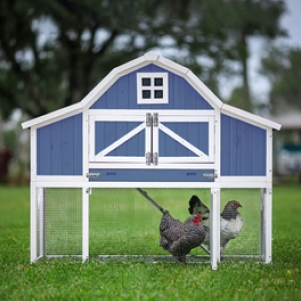
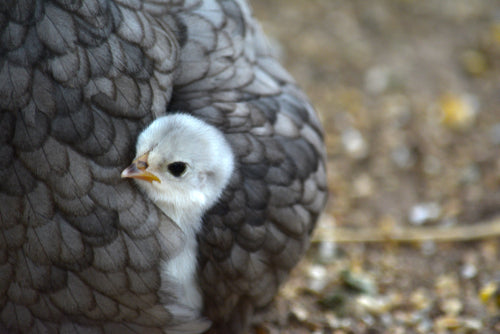

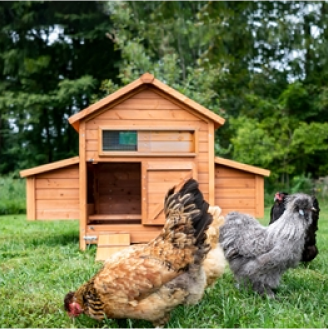

"The Clubhouse" Coop
Easy to assemble and built to last, the Clubhouse Coop is the perfect starter coop for a small flock.
Top Picks for you!
-
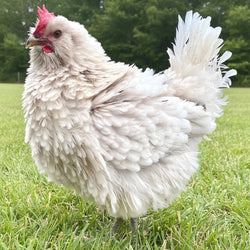 Baby Chicks: Frizzle Bountiful Blue Egg LayerRegular price From $19.99Regular priceUnit price per
 -
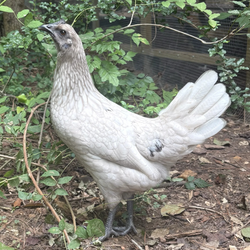 Baby Chicks: Zombie ChickenRegular price From $19.99Regular priceUnit price per
 -
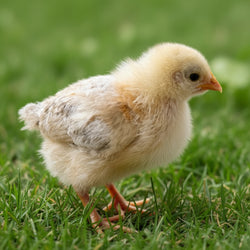 Baby Chicks: Marraduna BasqueRegular price From $29.99Regular priceUnit price per
 -
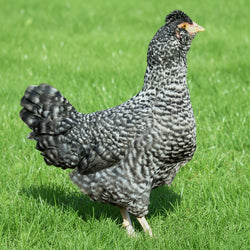 Baby Chicks: Deep Ocean CuckooRegular price From $4.99Regular priceUnit price per
 -
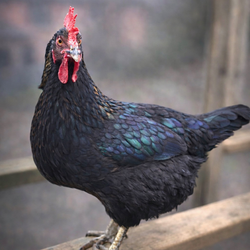 Baby Chicks: Ameribella Sex-LinkRegular price From $11.99Regular priceUnit price per
 -
 Baby Chicks: Lavender Dream Easter EggerRegular price From $24.99Regular priceUnit price per
 -
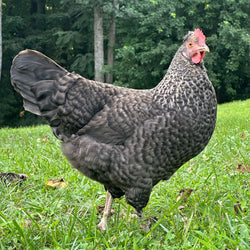 Baby Chicks: Gold Kissed Granite Olive EggerRegular price From $12.99Regular priceUnit price per
 -
 Baby Chicks: Easter EggerRegular price From $3.99Regular priceUnit price per
 -
 Baby Chicks: Black Copper MaransRegular price From $10.99Regular priceUnit price per
 -
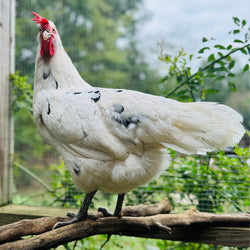 Baby Chicks: Austra WhiteRegular price From $3.49Regular priceUnit price per
 -
 Baby Chicks: AnconaRegular price From $3.99Regular priceUnit price per
 -
 Baby Chicks: Ayam CemaniRegular price $69.99Regular priceUnit price per


