Frequently Asked Questions
Here we answer the most commonly-asked questions about ordering, chicken care, and more.
What is a chicken's vent? Fluff? Wheezer? Cloaca?
Prepare yourself for this: a chicken's vent is the opening where she expels waste AND the opening from which she lays her eggs. It's all one thing--eww, gross! It's actually not quite as shocking as you might think. You can see here that the intestinal tract and the reproductive tract ARE separate things in your chicken. They just end up venting from the same opening, the vent, which is under your chicken's tail. You can't quite see the vent in this photograph; it's just below the tail and just above the "fluff" (the soft feathers around her rear end). "Cloaca"...
Read MoreCan I cancel or change my order for fertile hatching eggs?
Yes, we're happy to cancel or change an order of fertile hatching eggs provided you let us know by the week before your scheduled ship week. Since we ship eggs any day from Monday to Saturday, if you want to cancel or change your order for fertile hatching eggs, that must be done by the previous Monday. As you remember from checkout, your order cannot be cancelled (or changed) later than that date. Be sure to have your order number at hand so we can find your order to cancel it. In addition, you should be aware that you may...
Read MoreWhat is wire gauge, and why should I care about it?
When you're looking at fencing or hardware cloth for your flock's enclosure, you may run into the term "wire gauge," and wonder that that is, and which is best! Wire gauge is essentially just a measurement of how thick the wire is. In terms of fencing here in the US, the LOWER the gauge, the thicker the wire. Thicker wire, of course, is sturdier and will provide more predator protection, because predators will be less likely to be able to tear through it. On the other hand, thicker wire will also be harder to manipulate, and will require a lot...
Read MoreWill my chickens be bothered by mice?
Well, it's true that if you leave chicken feed out where mice can get to it, it's possible that some may show up to eat the feed, just as they would if you left any sort of feed out (such as dog food or cat food or wild bird seed). And it's also true that you don't want a mouse or other rodents pooping in your chicken feed. But will they bother the chickens? Uh, not likely. Observe: Chickens are omnivores. If you think about it, you know they eat insects. But what you might not realize is that they'll...
Read MoreWhat is the best brand of chicken feed?
That's a little like asking for the best brand of jeans. In other words, most major brands are going to be fine, and what's "best" will depend on you and your needs. It will be a matter of what is convenient to purchase, what the cost is, and maybe a matter of how well something "fits" your flock and your family. If you want organic, non-GMO feed, a regular feed just won't be a good fit for you (and our organic poultry feeds certainly fit the bill!). Some flocks prefer pellets; others prefer mash. Some breeds convert feed efficiently and...
Read MoreWhat does BBS stand for with chickens?
BBS stands for "Blue-Black-Splash." But that doesn't tell you a whole lot, either, if you don't know how the genetics of blue plumage colors works! When you breed a blue bird to a blue bird, about 50% of the offspring will be blue (a grey color), 25% will be black, and 25% will be splash (a white or pale grey color with splashes of darker grey and black). So, when you order BBS Cochin chicks, for example, you'll receive a mix of blue, black, and splash colors. To get 100% blue birds, you would want to breed black to splash....
Read MoreHow do I raise show quality chickens?
Well, it helps to start with good stock. Have a look at our special lines that are more likely to produce show quality prospects. You may also find good lines with specialized breeders. Just keep in mind that even with the very best lines, not every bird is going to be a winner of shows, not even for experienced exhibitors. Once you've got your stock, you'll want to provide high-quality food, and you may even want to weigh your birds frequently as they grow to make sure they're putting on weight fast enough---but not too fast! Make sure you're familiar...
Read MoreAll about Virulent Newcastle Disease
Virulent Newcastle Disease (VND) is no joke. It is easily spread among birds (wild and domestic), and once it is contracted, even birds that survive continue to be carriers of the virus, endangering all the birds around them. Because of this, VND is a reportable disease for which euthanasia is recommended. Read on to find out more: Virulent Newcastle Also called Pseudo-plague, Asiatic Newcastle, VVND, NVND, VND, Velogenic Newcastle, VN, Pneumoencephalitis, formerly called Exotic Newcastle Prevalence Rare Signs General signs Sudden death with no prior symptoms, or respiratory signs with a neurological component, including paralysis or partial paralysis of limbs,...
Read More
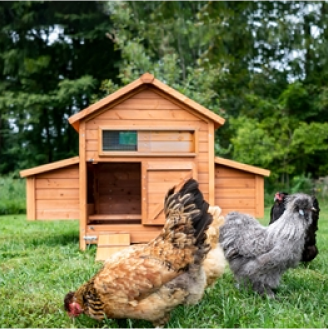

"The Clubhouse" Coop
Easy to assemble and built to last, the Clubhouse Coop is the perfect starter coop for a small flock.
Top Picks for you!
-
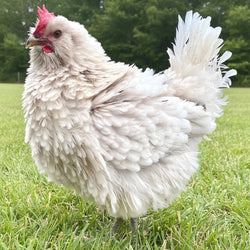 Baby Chicks: Frizzle Bountiful Blue Egg LayerRegular price From $19.99Regular priceUnit price per
 -
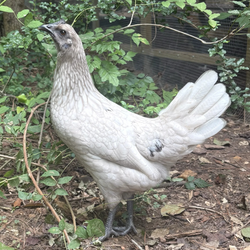 Baby Chicks: Zombie ChickenRegular price From $19.99Regular priceUnit price per
 -
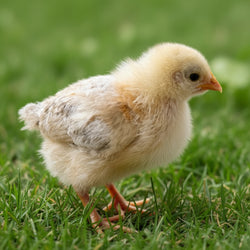 Baby Chicks: Marraduna BasqueRegular price From $29.99Regular priceUnit price per
 -
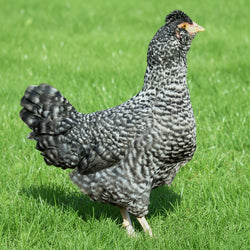 Baby Chicks: Deep Ocean CuckooRegular price From $4.99Regular priceUnit price per
 -
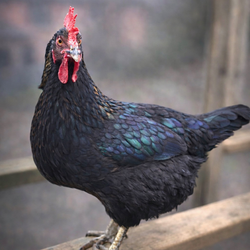 Baby Chicks: Ameribella Sex-LinkRegular price From $11.99Regular priceUnit price per
 -
 Baby Chicks: Lavender Dream Easter EggerRegular price From $24.99Regular priceUnit price per
 -
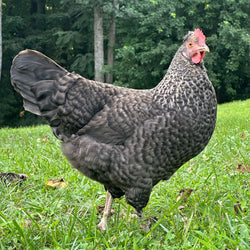 Baby Chicks: Gold Kissed Granite Olive EggerRegular price From $12.99Regular priceUnit price per
 -
 Baby Chicks: Easter EggerRegular price From $3.99Regular priceUnit price per
 -
 Baby Chicks: Black Copper MaransRegular price From $10.99Regular priceUnit price per
 -
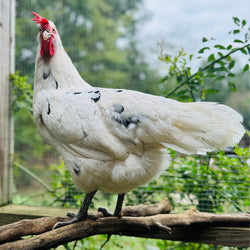 Baby Chicks: Austra WhiteRegular price From $3.49Regular priceUnit price per
 -
 Baby Chicks: AnconaRegular price From $3.99Regular priceUnit price per
 -
 Baby Chicks: Ayam CemaniRegular price $69.99Regular priceUnit price per


