Frequently Asked Questions
Here we answer the most commonly-asked questions about ordering, chicken care, and more.
What's the best way to order a breed that always seems to be sold out?
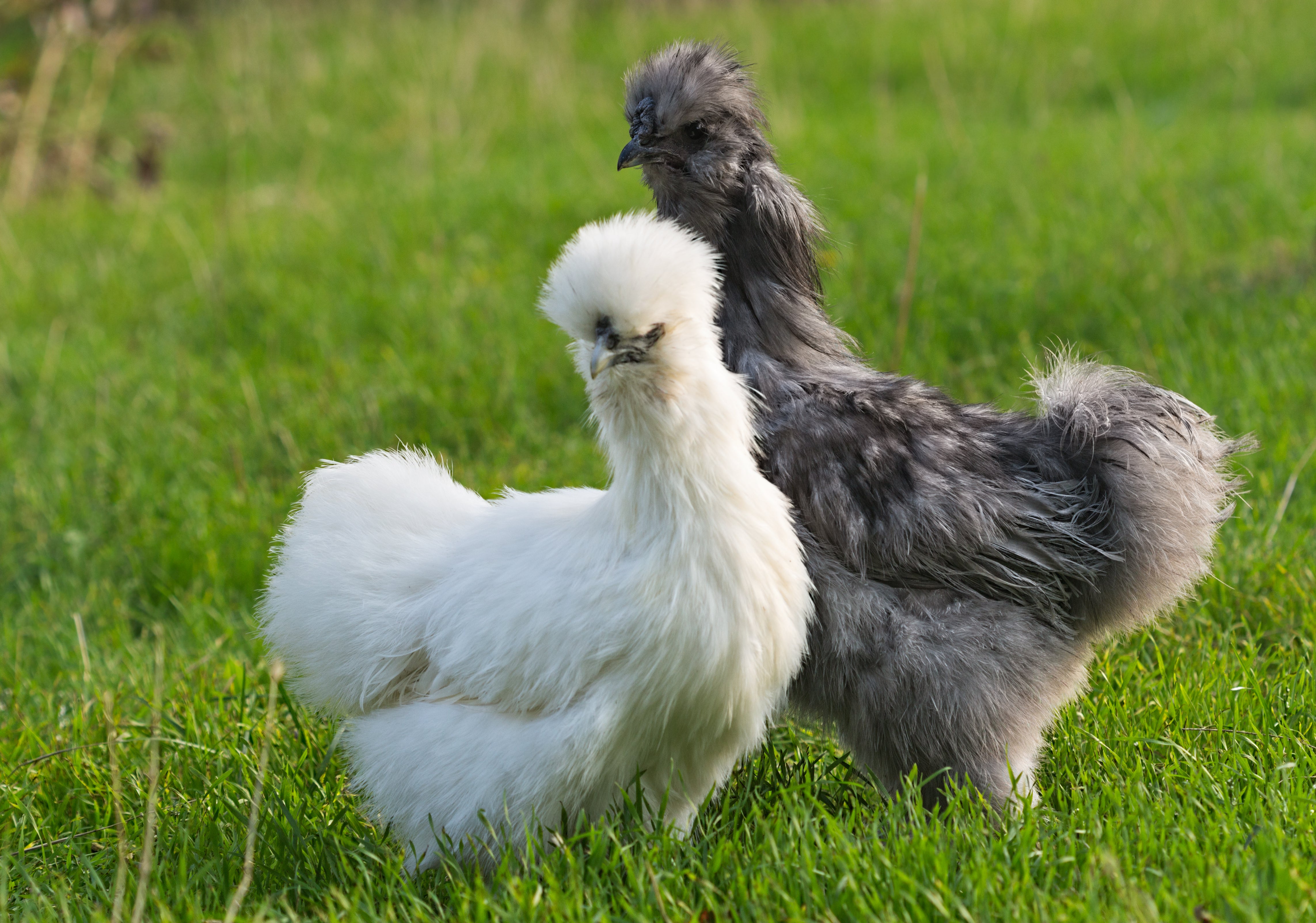
We're sorry the breed you want is currently sold out, but yes---there is hope if you're diligent! It's the MUST HAVE white Silkie! Our website always has up to date availability information, because as orders are placed, our inventory of chicks is updated automatically every five minutes. Sometimes more availability dates can be added throughout the year due to updates to our flocks' expected egg production, or due to cancellations by other customers. This additional availability is usually added on Mondays and Tuesdays, so those are the best days to check for new dates. So, if out of stock status...
Read MoreHow do I help a chick that isn't eating or drinking?
Well, first remember that if you hatched these babies at home, chicks don't actually need to eat or drink for the first two or three days... so the fact that your home-hatched chicks aren't eating or drinking immediately isn't always a cause for concern. Strange but true. Hatching is hard work, and with the yolk that they have just absorbed to sustain them, sometimes they just take time to rest and recover. That said, if you've had chicks shipped rather than hatching them at home---or if your home-hatched chicks are a couple days old or seem weak---they will definitely need...
Read MoreMy chicks were delivered a day late by the post office. Will they refund me?
Unfortunately, no. USPS does NOT guarantee overnight Express delivery for live animals, as much as we would like them to. We agree: it seems a little crazy that the MOST important packages aren't subject to the same guarantees that much less sensitive packages have... but that is their policy. Even though the Post Office won't refund your postage, as a part of My Pet Chicken's 100% Live Arrival Guarantee, in addition to refunding the cost of lost chicks, we do cover shipping costs in some circumstances (out of our own pockets). Read details of our 100% Live Arrival Guarantee here...
Read MoreWhy do chickens lay different colored eggs?
Well, we can tell you HOW the different colors are made, but as to WHY the different colors are produced, there are just theories. There are guesses, but no one really knows for sure. It's intuitive to think that the colors and patterns of bird eggs should help provide camouflage for the eggs while they're in the nest. However, it's been problematic to show a relationship. For instance, one scientist, Gotmark, painted eggs different colors (brown, white, blue, spotted) and placed them in nests with varying degrees of cover, then kept track of which eggs suffered predation. The color didn't...
Read MoreIf I order straight run bantams, will I get a 50-50 mix, or do you use your extra cockerels as straight run?
We do not use sexed birds as straight run. (No hatchery we know of does that--how dishonest would THAT be?!.) It does not pay us to sex all our baby chicks--the services of a chicken sexer are expensive because it is such a specialized skill and takes so many years to learn. We sex enough baby chicks to fulfill orders for the sexed birds that week, and only those that are NOT sexed are used as straight run birds. Any extra sexed chicks will be used to substitute for the same sex of another breed that had a bad hatch...
Read MoreWhen will my chickens begin laying again in the spring?
Some chicken breeds lay year round (save when they go broody). One of our employees who's at a mid-latitude in the US reports that any girls who stop laying during the winter begin again regularly--and surprisingly precisely--on February 1 or 2, about halfway between the winter solstice and the spring equinox. If you live in an area where day length doesn't change much, your chickens may begin laying sooner (or never stop). If you live in an area where winter days are very short and cold, they may begin laying again later in the year. While it's the increasing light...
Read MoreHow can I keep my brooder warm during a power outage so my baby chicks don't die?
Power loss can happen at any time due to storms, fallen trees, traffic accidents, construction, lightning, and more. A prolonged power outage can be a real problem if you have baby chicks or waterfowl in the brooder and are depending on an electric heater to keep them warm. You don't want anything to happen to your babies, so it's important to be prepared in case the power goes out on you. Here are some ideas to help keep your chicks safe in the event of a power outage: Hot Water Bottles - One of our customers from Vermont told us...
Read MoreHow can I stop my rooster from pecking my hens?
Unless your rooster is causing the hens injury, pecking hens on their backs and heads is actually no cause for concern. It is courting behavior. He pecks them on their backs or heads as a signal that he would like to mate. With enough hens for each rooster present--we normally recommend 10 - 12 hens to one rooster--you shouldn't have any trouble with his over-breeding the hens, although it's still possible he might develop a favorite or two. When a hen gets pecked like that, if she is ready to mate, she will squat down so she can be mounted....
Read More
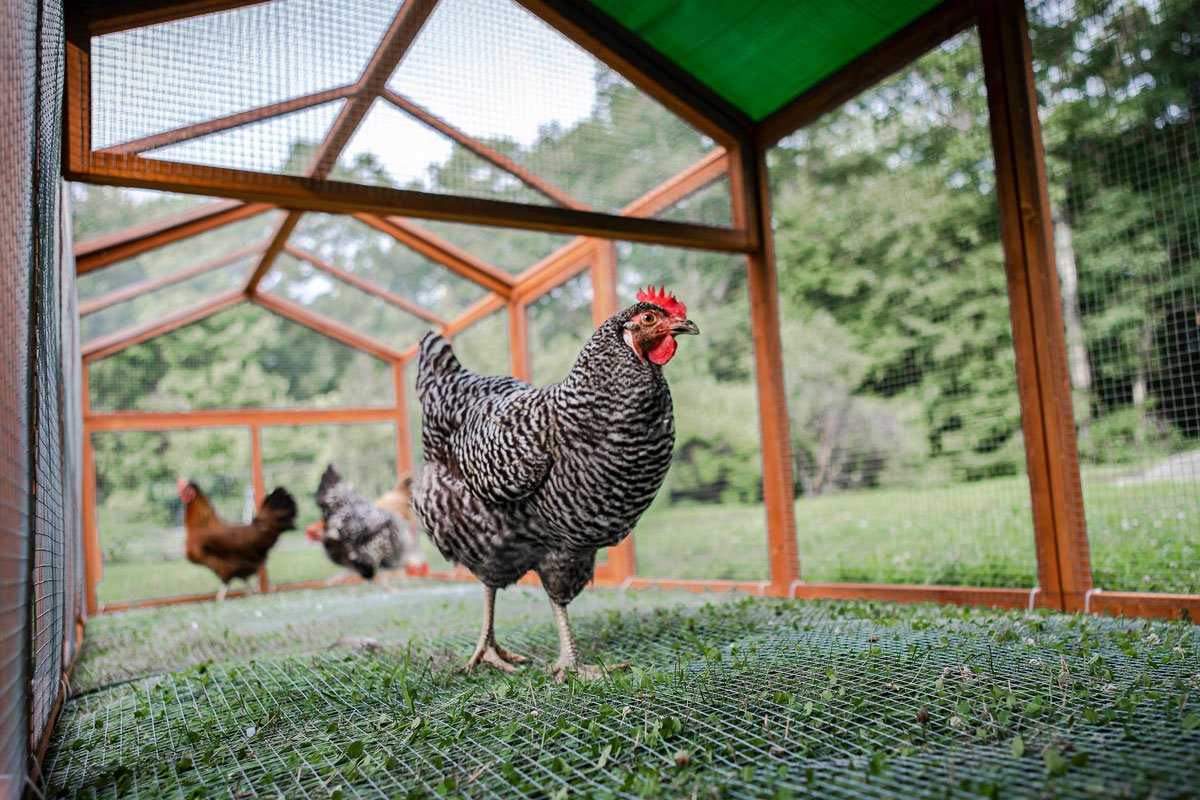
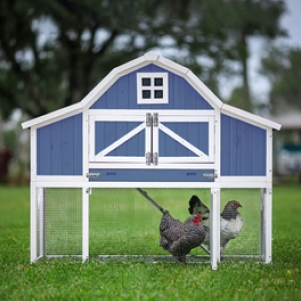
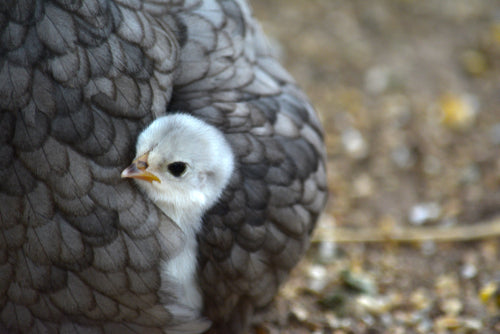
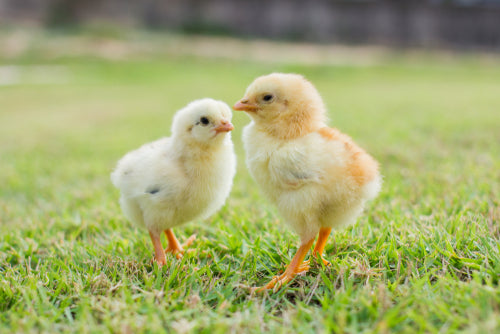
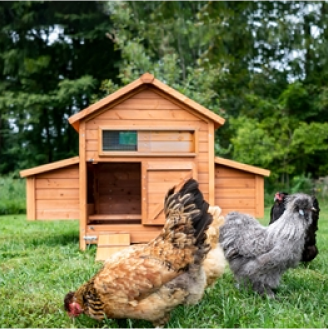

"The Clubhouse" Coop
Easy to assemble and built to last, the Clubhouse Coop is the perfect starter coop for a small flock.
Top Picks for you!
-
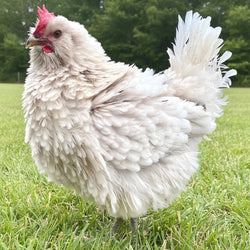 Baby Chicks: Frizzle Bountiful Blue Egg LayerRegular price From $19.99Regular priceUnit price per
 -
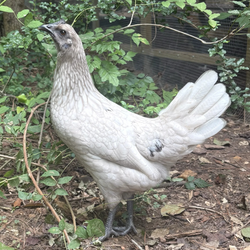 Baby Chicks: Zombie ChickenRegular price From $19.99Regular priceUnit price per
 -
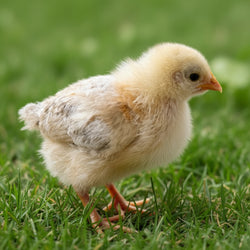 Baby Chicks: Marraduna BasqueRegular price From $29.99Regular priceUnit price per
 -
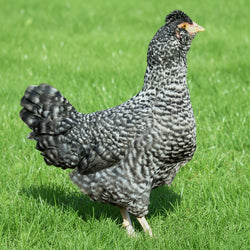 Baby Chicks: Deep Ocean CuckooRegular price From $4.99Regular priceUnit price per
 -
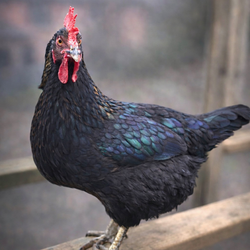 Baby Chicks: Ameribella Sex-LinkRegular price From $11.99Regular priceUnit price per
 -
 Baby Chicks: Lavender Dream Easter EggerRegular price From $24.99Regular priceUnit price per
 -
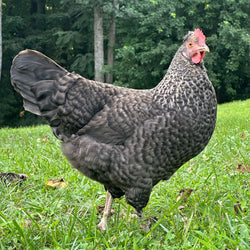 Baby Chicks: Gold Kissed Granite Olive EggerRegular price From $12.99Regular priceUnit price per
 -
 Baby Chicks: Easter EggerRegular price From $3.99Regular priceUnit price per
 -
 Baby Chicks: Black Copper MaransRegular price From $10.99Regular priceUnit price per
 -
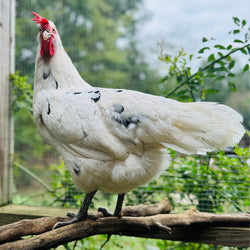 Baby Chicks: Austra WhiteRegular price From $3.49Regular priceUnit price per
 -
 Baby Chicks: AnconaRegular price From $3.99Regular priceUnit price per
 -
 Baby Chicks: Ayam CemaniRegular price $69.99Regular priceUnit price per


