Frequently Asked Questions
Here we answer the most commonly-asked questions about ordering, chicken care, and more.
How much does shipping cost?
You can check the exact shipping cost to your location by placing the items you want in your shopping basket and clicking the "calculate" link (you'll have to enter your zip code so the cost can be calculated).Small orders of baby chicks, ducklings, and goslings need extra attention to ship safely, so they include high tech long lasting heat packs to keep the babies warm, plus custom amounts of nesting material and ventilation to prevent jostling or stifling, based on the prevailing weather. Due to this special attention, very small orders of chicks and waterfowl cost a good deal more...
Read MoreMy hen laid a teeny tiny egg, and when I cracked it open, there was no yolk! Should I be concerned?
Awww, isn't that cute! Tiny, yolkless eggs are sometimes known as witch eggs or fairy eggs. Cute, huh?Occasionally, a hen will lay a fairy egg when something has disturbed her reproductive cycle. Sometimes a hen will lay a fairy egg or two just as she comes into laying, before her reproductive system has gotten into gear. They do come in all the colors that hens lay: white, brown, green, blue, and so on, although they are sometimes lighter or darker than her regular eggs because they may spend more or less time in the "egg painting" area of her system,...
Read MoreCan chickens fly? Will my chickens be able to fly over my fence?
Most heavy, docile backyard breeds don't fly very well and aren't particularly inclined to leave a secure, fenced area. A regular picket fence (if the pickets are close) will do to keep many adult large fowl chickens enclosed. But that said, a picket fence is probably not going to help you very much for a few reasons. A low picket fence won't work for some breeds--some backyard breeds like Leghorns or Hamburgs are pretty good fliers and will jump fences like they're not even there---and range far! Small or juvenile birds will slip between pickets or wires. And a regular...
Read MoreHow do I get my chickens to sleep on their roosts instead of in their nest boxes at night?
Having your chickens sleeping in their nests at night sounds like a natural thing, doesn't it? However, unless your hens are broody and hatching fertile eggs, having them sleep in the nests is a bad idea. As they sleep, they will defecate and soil the nests, and this means that when you do gather eggs, your eggs are likely to be dirty--yuck! Your flock should be sleeping on their roosts. Chickens should sleep on their roosts, NOT in nests For that reason, it can be helpful not to add nest boxes to your coop until a few weeks before your...
Read MoreWhich bantam breeds should I choose if I want them for eggs?
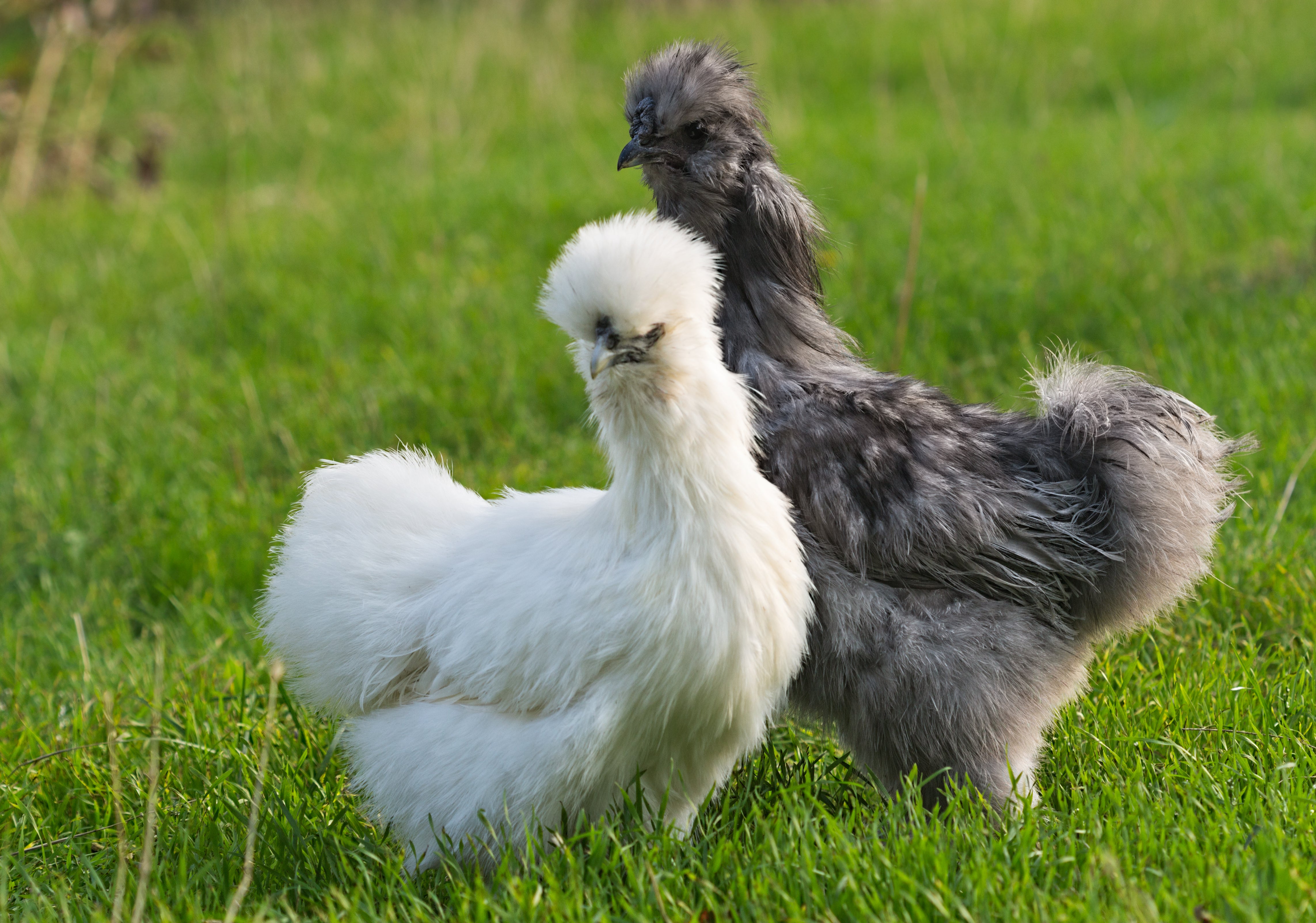
Bantam eggs in general are quite small by comparison to what you see in the grocery store. That makes sense! Smaller birds lay smaller eggs. Below you see two cochins, one a bantam and the other a regular-sized large fowl cochin. Of course the bantam cochins will lay smaller eggs. (They have smaller chicks, too!) Regardless, bantam chicken eggs taste the same as the eggs of larger chickens, and certainly if your birds have access to pasture, bantam or large fowl, the eggs will taste MUCH better than what you can get in a grocery store. However, some bantams lay...
Read MoreHow do I cook with bantam eggs?
The eggs of bantam chickens are smaller than the eggs we're used to seeing in the grocery store. Just how small? Of course, it really depends on the hen. For instance, the eggs of Sebright bantams and Belgian bantams, are SUPER tiny, but the eggs of Silkie bantams are simply small. So all bantam eggs are not equivalent, the same way some large fowl breeds lay jumbo eggs, while others lay medium eggs. Here are the size classifications for eggs: 1 jumbo egg - 2.50 ounces 1 extra-large egg - 2.25 ounces 1 large egg - 2 ounces 1 medium...
Read MoreWhy do I need to store my eggs large end up?
Storing your eggs large end up will keep them freshest. This is because the air cell in an egg is located at the large end, so less moisture will evaporate out of the egg if it is set with the air cell up in the carton. The pointy end, with egg white closer to the porous surface of the shell, is less exposed to air when it is pointing DOWN in the carton. Frankly, though, if you are storing eggs for eating, it probably won't make much difference unless you are storing them for very long periods of time (and...
Read MoreHow can I help my chickens stay cool in the summer?
Chickens don't sweat like humans do to cool down. Much like dogs, they pant to help stay cool. When they are very hot, you will also see them holding their wings out slightly from their bodies and ruffling their feathers to help the heat escape. Be sure they have plenty of shade and fresh, cool water when it is hot outside. Water is extremely important! A lack of water, even for a few hours, can throw them off laying, put them at risk for heat stroke, and make it difficult for them to manage their body temperatures. But you can...
Read More
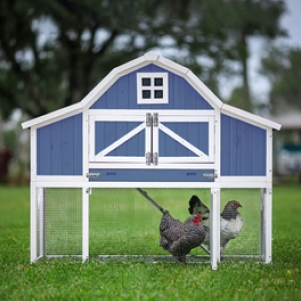
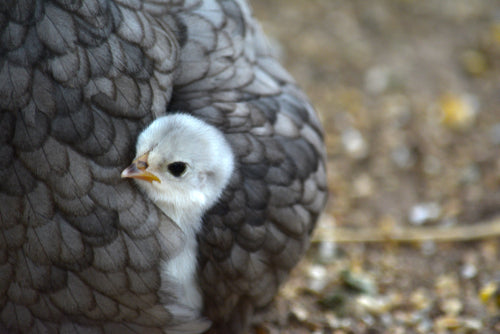
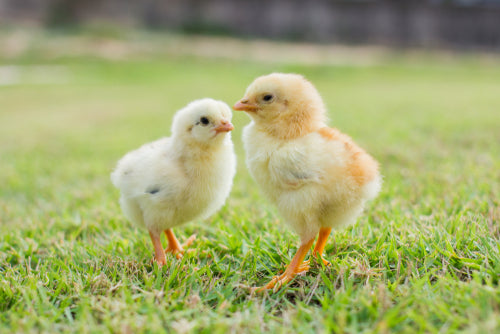
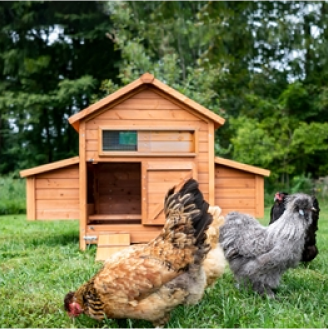

"The Clubhouse" Coop
Easy to assemble and built to last, the Clubhouse Coop is the perfect starter coop for a small flock.
Top Picks for you!
-
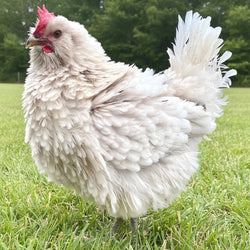 Baby Chicks: Frizzle Bountiful Blue Egg LayerRegular price From $19.99Regular priceUnit price per
 -
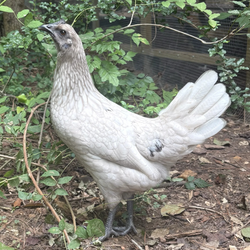 Baby Chicks: Zombie ChickenRegular price From $19.99Regular priceUnit price per
 -
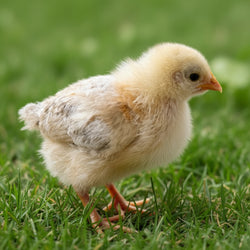 Baby Chicks: Marraduna BasqueRegular price From $29.99Regular priceUnit price per
 -
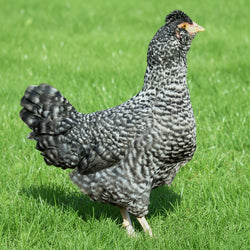 Baby Chicks: Deep Ocean CuckooRegular price From $4.99Regular priceUnit price per
 -
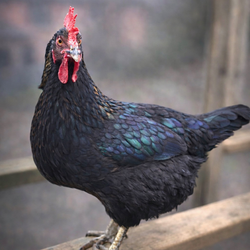 Baby Chicks: Ameribella Sex-LinkRegular price From $11.99Regular priceUnit price per
 -
 Baby Chicks: Lavender Dream Easter EggerRegular price From $24.99Regular priceUnit price per
 -
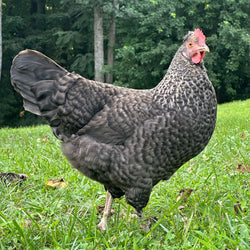 Baby Chicks: Gold Kissed Granite Olive EggerRegular price From $12.99Regular priceUnit price per
 -
 Baby Chicks: Easter EggerRegular price From $3.99Regular priceUnit price per
 -
 Baby Chicks: Black Copper MaransRegular price From $10.99Regular priceUnit price per
 -
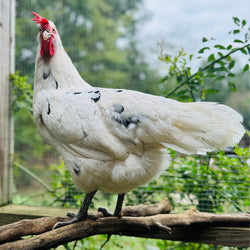 Baby Chicks: Austra WhiteRegular price From $3.49Regular priceUnit price per
 -
 Baby Chicks: AnconaRegular price From $3.99Regular priceUnit price per
 -
 Baby Chicks: Ayam CemaniRegular price $69.99Regular priceUnit price per


